

Transcription
Interview transcription
Transcribing an audio interview has many benefits but writing a transcription by hand can be painstakingly long. Amberscript’s transcription services utilize automatic speech recognition AI technology to transcribe audio interviews quickly and accurately.
Loved by over a million customers

















































Leading the market in secure transcription & subtitles
We prioritize your data security. Our platform is GDPR compliant, ISO 27001 & 9001 certified, and proudly holds the TPN badge for top-tier content security.

How to transcribe interviews

Machine-Made transcription
Our automatic transcription creates a draft of your transcript in the audio’s language.
- Work faster: Quick and editable; ideal for reviews, rough drafts, or repurposing spoken content.
- Scale efficiently: Perfect for large volumes or tight budgets.

- Enhance your transcript: Built-in editor to refine, add speaker labels, and export in multiple formats (Word, TXT..).
- Stay secure & compliant: Files stored in Europe, GDPR compliant, and ISO certified (27001 & 9001).
90% accuracy
From €0.25/min (varies by language)
90+ languages

Human-Made transcription
Our team of professionals creates >99% accurate transcripts, so you can focus on other projects.
- Unmatched accuracy: Professional transcribers deliver with over 99% accuracy. Perfect for legal, medical, academic, and other high-stakes content.
- Accessible & inclusive: Meeting accessibility standards like WCAG and ADA. Ideal for governments, and enterprises.
- Stay secure & compliant: Files stored in Europe, GDPR compliant, and ISO certified (27001 & 9001).
>99% accuracy
18+ languages
From €1,78/min (varies by language)
How it works
Understanding transcription
What it is, why it matters, and how it helps your work

What is an interview transcription?
Interview transcription is the process of converting recorded interviews into written documents. It involves capturing every word spoken by the interviewer and interviewee, including nonverbal cues. Interview transcription is important in various field such as research, journalism, law and healthcare.
Researchers can use transcriptions to analyse data accurately and identify key themes and patterns, while journalists can use them to quote interviewees accurately. In law, interview transcriptions can be used as evidence in legal proceedings. Overall, interview transcription is a valuable tool for capturing and preserving the information and insights shared during interviews.
What is transcription?
Transcription is the conversion of an audio or video recording into a written text. It usually involves conversations, interviews or written documents. Trying to remember everything that is said in a conversation is often inaccurate. The purpose of a transcription is to remove the transience of oral statements and to have a written version of them through a transcript. This way of documentation cannot get lost and can be used for later analysis.


Why should you transcribe interviews?
If an interview is not transcribed, it cannot be coded, analysed and commented on. Also, an interview is unstructured data – once you record and transcribe it, you have proof of the information that was exchanged. In written form, you can actually decode the information, cite it and use it for your research.
Transcribe your interviews
With Amberscript
1. Advanced technology for accurate transcription
Automatic speech recognition (ASR) with high accuracy: Amberscript uses advanced ASR technology with high accuracy rates to transcribe interviews quickly and efficiently.
Advanced language models and natural language processing (NLP): Amberscript’s advanced language models and NLP technology enable it to accurately transcribe interviews in a variety of languages and dialects.
2. Options for additional human proofreading
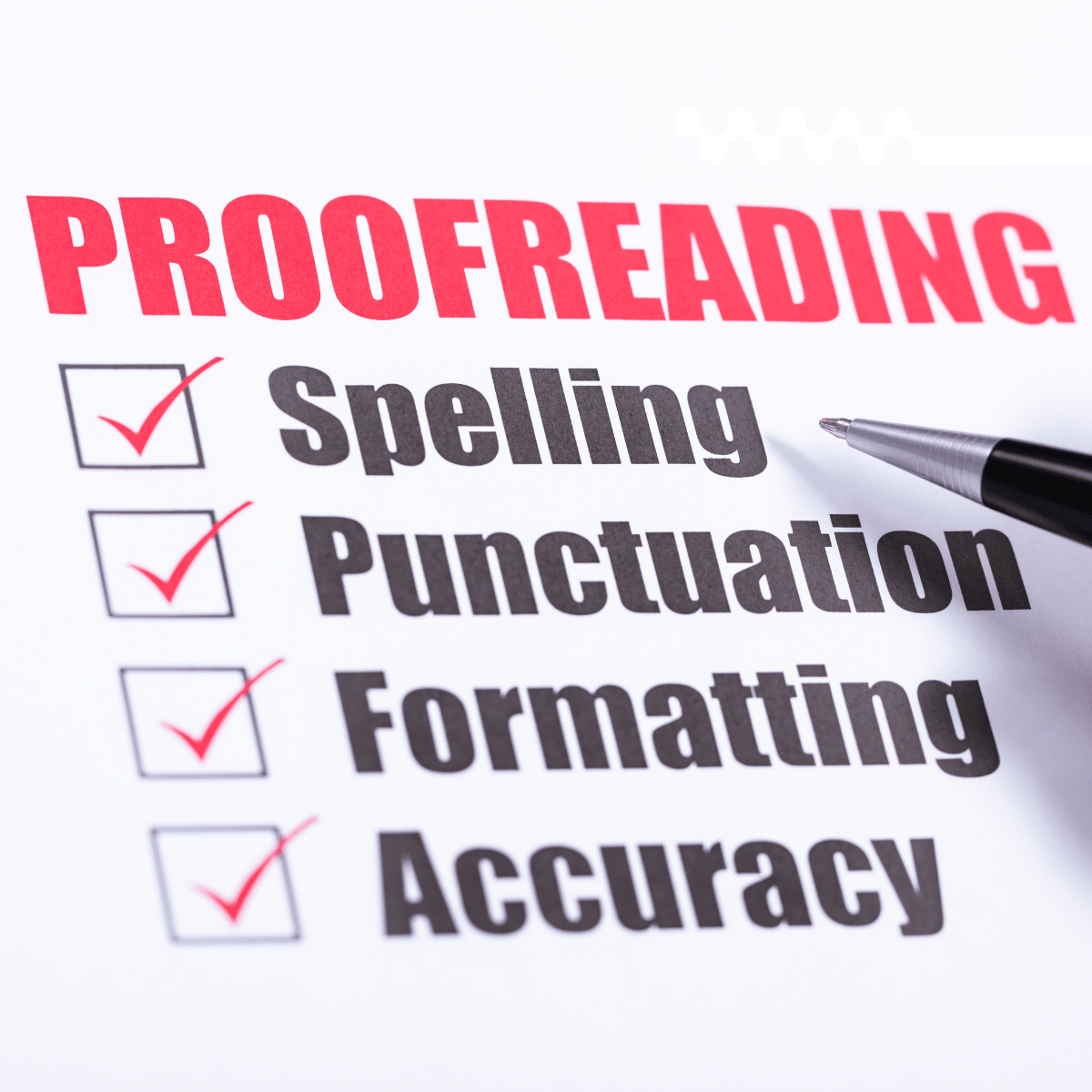
Human transcribers for added accuracy and quality: For added accuracy and quality, Amberscript offers the option of having human transcribers review and edit the automatic transcription.
Confidentiality agreements and secure data handling: Amberscript takes data privacy and confidentiality seriously, ensuring that all transcribers sign confidentiality agreements and that all data is handled securely.
3. Data privacy and security measures
Compliant with GDPR and other privacy regulations: Amberscript is compliant with the EU’s General Data Protection Regulation (GDPR) and other privacy regulations to ensure the protection of personal data.
Encrypted data storage and access controls: Amberscript encrypts all data at rest and in transit and has strict access controls to ensure that data is only accessible to authorized personnel.

FAQ about Interviews
/01
Can you transcribe audio with foreign accents?
Yes, our software is constantly being trained to pick up on accents and know how to understand them. Want to know more about how this works? Read it here!
/02
Do you transcribe files with multiple speakers?
Yes, our software can transcribe multi-speaker files and can also distinguish different speakers in the transcript. Different speakers will be indicated as “speaker 1”, “speaker 2”, etc. You can rename speakers in the online editor.
/03
How do automatic transcription services work?
In a few words, the software “listens” to the audio, identifies the words used and returns it into a text format. That is possible through the use of sophisticated speech recognition technology. In brief, such systems are composed of acoustic and linguistic components running on one or several computers.
/04
How long does it take to transcribe my files to text?
Our speech AI delivers results in less than an hour (depending on the size of the file, it can also just take a few minutes). Just upload your audio into our system and we will notify you as soon as the file is ready!
/05
Will different speakers be distinguished?
In the transcript, different speakers will be indicated as “speaker 1”, “speaker 2”, etc. You can rename speakers in the online editor.
/06
Do you also offer translations?
Yes, we do. We regularly do projects in many different languages. If you have a request please let us know through our contact form. Translated subtitles can be requested during the upload process.
/07
Do you edit words (e.g. umm, uhh)?
We can, but this depends on the type of transcription you have ordered with us, “clean” or “verbatim”. To learn more about the difference between the two, read our blog.
/08
Do you offer services in other languages?
We manually transcribe through our network of language experts in 15 different languages, but if you have a request for another language please use our contact form.
/09
Do you provide full verbatim or clean read transcripts?
In the manual transcription service, we provide both transcription types.
/10
How long does it take until I receive a transcript?
Typically, transcripts corrected by our professional transcribers are delivered in up to 5 working days. You can also place a rush order during the uploading process.
/11
What is the difference between “Clean read” and “Full verbatim”?
In short, “clean” transcription leads to transcripts that are easy to read and do not contain any repetitions or stutters. “Verbatim” transcription is more comprehensive, as it contains everything that can be heard in the audio/video file. Want to know more about the differences and types of transcription?